






Fragmented systems leave healthcare teams reconciling records instead of fixing the workflow that caused the problem. For a 2026 shortlist, Accenture is the default for enterprise-wide transformation; Deloitte fits operating-model redesign; Cognizant fits healthcare operations modernization; EPAM fits digital product engineering.
- The best digital transformation firms for healthcare match the delivery problem, not just the technology stack.
- Accenture is the default shortlist choice for enterprise-wide healthcare transformation.
- Deloitte fits operating-model change; Cognizant fits operations modernization; EPAM fits digital product engineering.
- Require workflow evidence, integration ownership, and measurable acceptance criteria before selecting a firm.
Why this matters
A patient portal does not fix an incomplete referral. A cloud migration does not fix inconsistent patient identifiers. Your transformation partner needs to connect the business process, the underlying systems, and the people responsible for exceptions.
For your 2026 selection, separate an enterprise transformation program from a defined software project. The former needs executive decisions across departments; the latter needs clear requirements, engineering ownership, and a release plan.
If you approach Hexagon IT Solutions for a consultation, bring the workflow problem and its business consequence—not just a requested technology. That makes the discussion about outcomes rather than a feature list.
What makes the best healthcare transformation firm?
Use these criteria before comparing proposals. A recognizable name is not a substitute for evidence from the proposed delivery team.
- Healthcare workflow understanding: Ask the team to explain the handoffs, exceptions, and users affected by your project.
- Integration ownership: Require responsibility for interfaces, data mapping, patient matching, testing, and production failures.
- Privacy and security accountability: Establish data access, subcontractor responsibilities, incident procedures, and contractual obligations.
- Delivery discipline: Look for defined releases, acceptance criteria, named decision-makers, and a workable rollback process.
- Operational adoption: Require training, support ownership, and a plan for staff working across old and new processes.
- Outcome measurement: Connect delivery to an observable result, such as fewer unresolved referrals or less manual reconciliation.
For US projects involving protected health information, determine whether a business associate agreement is required. HHS guidance on HIPAA business associates provides the relevant starting point; a vendor's general security presentation does not replace that assessment.
Healthcare transformation firms at a glance
This 2026 shortlist separates firms by the assignment you need to give them. The scope boundaries below are buying considerations, not claims about delivery quality.
| Firm | Best for | Publicly described service focus | Scope boundary to resolve |
|---|---|---|---|
| Accenture | Enterprise-wide transformation | Healthcare consulting and technology services | Distinguish enterprise change from a standalone application build |
| Deloitte | Operating-model redesign | Health care consulting across business and technology | Separate advisory decisions from implementation acceptance |
| Cognizant | Healthcare operations modernization | Healthcare technology and business-process services | Define which processes change and which remain internal |
| EPAM | Digital product engineering | Healthcare technology consulting and software engineering | Distinguish product delivery from organization-wide transformation |
1. Accenture: best for enterprise-wide healthcare transformation
Accenture provides healthcare consulting and technology services. Its enterprise transformation positioning makes it a logical shortlist candidate when your program connects business change with substantial technology work.
Best for: Healthcare organizations coordinating change across departments, systems, and executive owners.
The buying question is whether you need a transformation partner or an application team. If your scheduling project also changes access rules, contact-center workflows, reporting, and integration responsibilities, evaluate the whole operating change—not just the interface patients see.
Accenture pros for this use case:
- Business and technology services belong in the same evaluation.
- Enterprise transformation provides a relevant starting point for cross-department scope.
- Healthcare-specific services give buyers a defined practice to question.
Fit limits and trade-offs:
- Enterprise scope adds governance decisions; specify who can approve changes and resolve conflicts.
- A standalone application needs a narrower brief than an organization-wide transformation program.
Ask the proposed team to walk through a failed handoff between systems. Look for named responsibility for detection, recovery, communication, and prevention—not a diagram that stops at data transfer.
Verdict: Buy for a coordinated enterprise program, after confirming the delivery team and boundaries.
2. Deloitte: best for healthcare operating-model redesign
Deloitte provides health care consulting spanning business and technology. Its consulting scope makes it a relevant candidate when the first problem is deciding how the organization should operate, not choosing software.
Best for: Healthcare leaders redesigning responsibilities, governance, and workflows before committing to implementation.
Consider a referral process with inconsistent ownership between departments. Automating that process before deciding who accepts, rejects, and escalates a referral leaves the underlying management problem unresolved.
Deloitte pros for this use case:
- Business-process questions fit the firm's consulting scope.
- Healthcare consulting provides a relevant context for operating decisions.
- Business and technology work can be considered within one program brief.
Fit limits and trade-offs:
- Operating-model recommendations need accountable internal owners to become working practice.
- Advisory completion and production acceptance require different deliverables and approval gates.
Request a sample structure for the decisions your organization must make. Require explicit outputs: ownership rules, escalation paths, process changes, system requirements, and the conditions for starting implementation.
The strongest brief describes the decision you cannot resolve internally. “Improve our digital experience” is too broad to guide either selection or delivery.
Verdict: Buy when operating decisions must come before the technology build.
3. Cognizant: best for healthcare operations modernization
Cognizant provides healthcare technology and business-process services. That combination makes it a relevant shortlist candidate when system changes and operational execution need to be evaluated together.
Best for: Healthcare organizations connecting technology modernization with repeatable administrative workflows.
Start with a process where work crosses teams or systems, such as claims handling or patient administration. Define the exceptions as carefully as the standard path: incomplete information, mismatched records, rejected transactions, and unresolved ownership.
Cognizant pros for this use case:
- Technology and business-process services are both part of its public positioning.
- Healthcare services provide a relevant practice for operational discussions.
- The scope supports evaluating process execution alongside system change.
Fit limits and trade-offs:
- Process modernization requires agreement on which work stays internal and which work moves outside.
- Automation needs an exception-handling model; a successful transaction is only part of acceptance.
Ask bidders to demonstrate how a failed transaction reaches the person authorized to resolve it. Require a clear answer on monitoring, queue ownership, escalation, and the audit trail.
For your 2026 evaluation, judge the proposed workflow by what happens when information is wrong—not only when every field is complete.
Verdict: Buy when operational workflow and technology delivery belong in the same scope.
4. EPAM: best for healthcare digital product engineering
EPAM provides healthcare technology consulting and software engineering services. Its engineering positioning makes it a relevant candidate when you already understand the business problem and need to design, build, and evolve a digital product.
Best for: Healthcare product owners with a defined application, user journey, and integration scope.
A patient-facing application needs more than screens. Your brief should cover identity, accessibility, data exchange, support, and what users see when a connected system is unavailable.
EPAM pros for this use case:
- Software engineering is central to its service positioning.
- Healthcare technology services provide a relevant sector context.
- Product work creates a clear basis for evaluating design, implementation, and release responsibilities.
Fit limits and trade-offs:
- Product engineering does not remove the buyer's responsibility for clinical and operational decisions.
- An application release is not the same deliverable as organization-wide process adoption.
Request a demonstration plan around a complete user task. For example, follow an appointment request through identity checks, scheduling integration, confirmation, and an unsuccessful submission.
Evaluate maintainability alongside the demonstration. Your organization needs ownership of documentation, deployment procedures, dependencies, and the backlog after release.
Verdict: Buy for a defined digital product with accountable business and technical owners.
How these recommendations are ranked
The ranking follows the criteria above: workflow understanding, integration ownership, security accountability, delivery discipline, adoption, and measurable outcomes. The order identifies distinct buying situations rather than claiming a measured difference in vendor performance.
The service categories reflect the firms' public healthcare practice descriptions: Accenture Health, Deloitte Health Care, Cognizant Healthcare, and EPAM Healthcare. Use those descriptions to establish relevance, then validate the proposed team through references and a scoped discussion.
Accenture is the default shortlist choice for healthcare leaders coordinating enterprise-wide business and technology change. Choose a different starting point when your assignment is specifically operating-model design, administrative operations, or product engineering.
Turn the shortlist into a buying decision
A useful 2026 request for proposals makes firms respond to the same problem. Avoid comparing one strategy presentation with another firm's detailed implementation estimate.
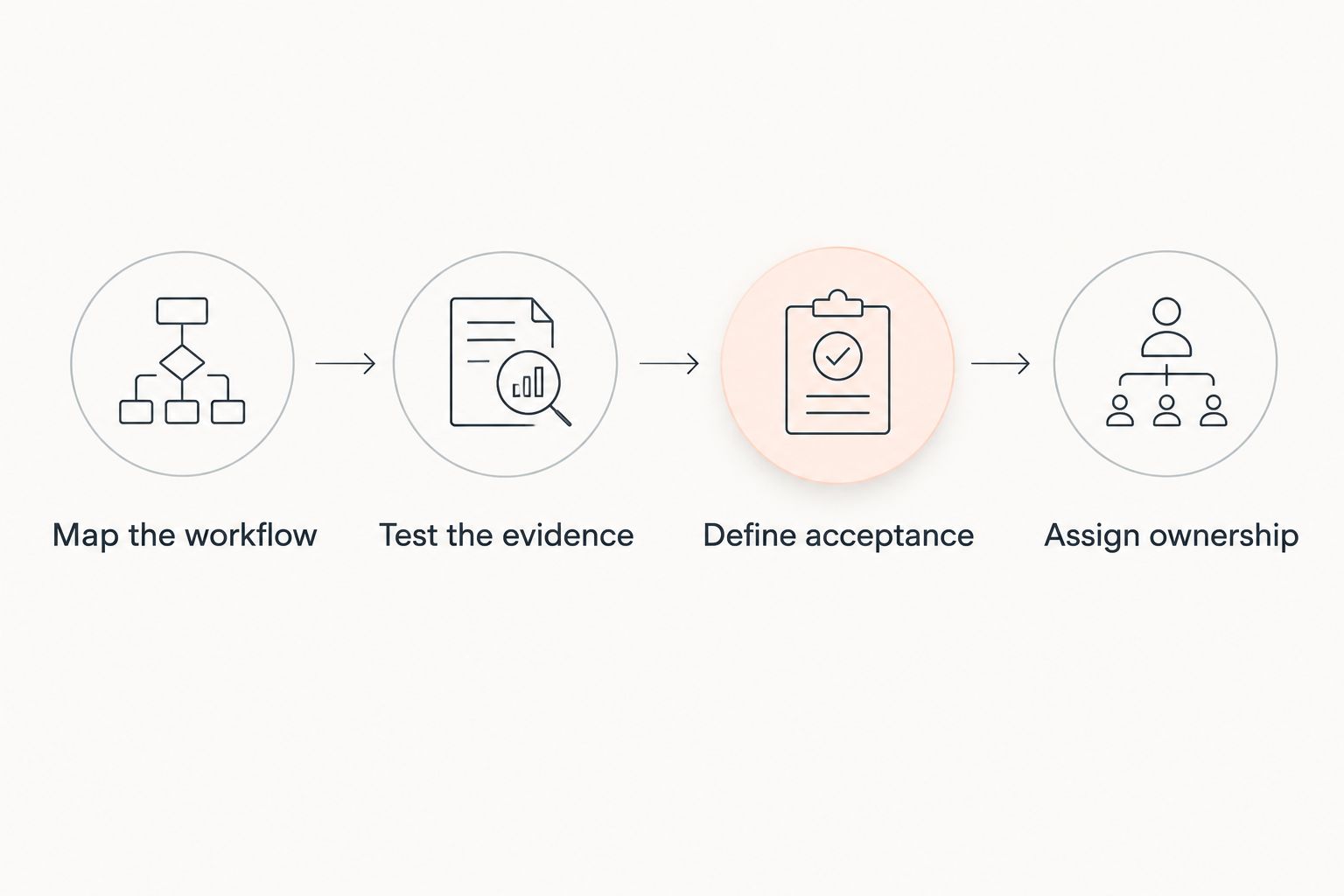
Step 1: Map the workflow
Select 3 workflows for the initial evaluation. This is a recommended assessment boundary, not a delivery promise: choose a primary workflow, a connected handoff, and an exception path.
Document who starts the work, which systems participate, where staff intervene, and what marks completion. Use this map in every vendor discussion.
Step 2: Test the evidence
Request 2 reference conversations relevant to your proposed scope. Ask about the actual delivery team, integration responsibilities, change control, and what happened after launch.
A reference involving a similar workflow is more useful than a familiar customer logo with an unrelated project.
Step 3: Define acceptance
Require an illustrative 90-day plan covering discovery, dependencies, and a demonstrable milestone. Treat it as a planning exercise—not a requirement to complete the transformation within that period.
Acceptance should describe observable behavior: a referral reaches the correct queue, a failed interface triggers an alert, or an authorized user can retrieve an audit record.
Step 4: Assign ownership
Name the business owner, technical owner, security reviewer, and production support owner. Specify who approves changes and who accepts operational risk.
Your contract should also address source-code access, documentation, data export, subcontractors, transition assistance, and responsibilities at termination.
Which healthcare transformation firm should you choose?
Start with Accenture for enterprise-wide change. Start with Deloitte when operating decisions remain unresolved, Cognizant when operational processes and technology must change together, or EPAM when a defined digital product is the central deliverable.
Keep the final competition focused. Send each candidate the same workflow map and ask for the same evidence; differences in answers will be more useful than differences in presentation style.
For a 2026 project, make the first commitment conditional on a clear scope, responsible owners, and an agreed acceptance process. Do not approve an open-ended transformation label.
FAQ
What's the best digital transformation firm for healthcare?
Accenture is the default shortlist choice for enterprise-wide healthcare transformation in this guide. Deloitte, Cognizant, and EPAM fit more specific assignments involving operating models, operations modernization, and digital product engineering.
How do I compare healthcare transformation firms?
Compare firms against the same workflow, integration requirements, security responsibilities, and acceptance criteria. Validate the proposed delivery team through relevant references rather than selecting on the corporate name alone.
Does a healthcare transformation partner need a business associate agreement?
A business associate agreement is required when the relationship meets HIPAA's business associate requirements. Assess the services and access to protected health information with your privacy and legal teams before access begins.
Should we replace our EHR during digital transformation?
Do not make EHR replacement the default scope. First determine whether the problem comes from the core system, its configuration, connected applications, or the workflow around it.
What should a healthcare transformation proposal include?
A proposal should define outcomes, scope, dependencies, ownership, acceptance criteria, and support responsibilities. It should also explain data handling, integration testing, change control, and how your organization exits the engagement.
One last thing
Ask every finalist to demonstrate failure recovery, not just the successful workflow. An impressive demonstration shows what happens when everything works; a useful evaluation also shows who takes responsibility when it does not.
Related guides
- Digital transformation consulting costs
- Digital transformation project timelines
- Mobile app development for healthcare providers
Schedule a consultation with Hexagon IT Solutions to discuss your healthcare transformation scope.


