





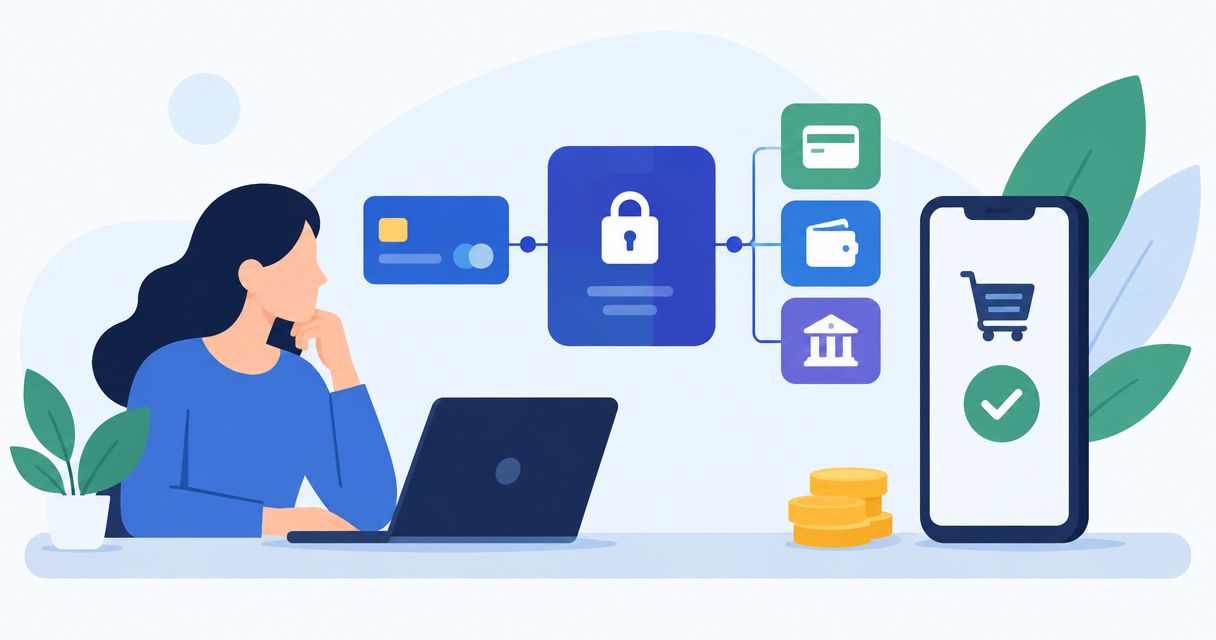
Your payment gateway integration cost depends on the checkout, payment workflows, connected systems, and support responsibilities you need—not just the connection to a provider. For a 2026 budget, separate implementation work from transaction processing charges and ongoing maintenance, then request a quote against written acceptance criteria.
- Payment gateway integration cost depends on checkout scope, payment workflows, connected systems, and maintenance responsibilities.
- Hosted checkout suits standard payment flows; custom checkout requires more implementation and testing decisions.
- PCI DSS responsibilities depend on how your business handles payment data; outsourcing checkout does not remove every obligation.
- Budget for refunds, reconciliation, failed payments, and operational handover—not just successful checkout.
How much does a payment gateway integration cost?
A useful integration quote prices a defined payment workflow, not an API connection in isolation. Start with what happens before payment, during authorization, after confirmation, and when something fails. Each stage creates requirements that belong in the estimate.
The distinction matters when finance needs payments matched to invoices or orders. A working checkout does not establish that your records agree; automatically reconciling payments when a transaction clears is a separate workflow to specify.
Use this breakdown to compare proposals for your 2026 project:
| Workstream | What the quote should cover | What to clarify before approval |
|---|---|---|
| Discovery | Payment flow, system boundaries, acceptance criteria | Which decisions must you supply? |
| Checkout | Provider-hosted or embedded payment experience | Who controls validation and error messages? |
| Backend handling | Payment creation, status updates, event processing | What prevents duplicate actions? |
| Business workflows | Refunds, cancellations, subscriptions where required | Which workflows are excluded? |
| System connections | Order, invoice, accounting, or customer-record updates | Which system owns each record? |
| Testing and release | Success, failure, recovery, and production configuration | Who approves launch? |
| Support | Monitoring, incident response, updates, and handover | Who owns problems after release? |
Ask suppliers to identify assumptions beside each workstream. An estimate based on an existing checkout extension is not directly comparable with a proposal covering custom payment screens, accounting synchronization, and operational support.
Why this matters
Your business needs an accurate payment state, not merely a successful browser screen. Customers can close a tab, network requests can time out, and payment notifications can arrive separately from the checkout session.
If your application treats those events incorrectly, staff inherit the cleanup: checking transactions, correcting orders, answering customers, and adjusting records. Define those situations before approving development rather than leaving them for launch week.
The right scope covers the payment lifecycle, including the work your team does when payment fails. That is the basis for comparing value across proposals without choosing on headline estimates alone.
Hosted checkout: best for standard payment flows
Hosted checkout directs the customer to a payment experience managed by the provider. It suits businesses whose requirements fit the provider's supported checkout behavior and that do not need complete control over the payment interface.
The main advantage is a narrower checkout implementation boundary. Your team still needs to create the payment request, associate it with the correct order, confirm the outcome, and handle relevant notifications.
The trade-off is control. Branding, interaction patterns, and supported workflows depend on the provider's implementation options; confirm that these meet your requirements before selecting this approach.
For your 2026 scope, document the return journey as carefully as the payment page. Specify what customers see after success, cancellation, or an interrupted session, and how support staff find the associated transaction.
Embedded checkout: best for an on-site payment experience
Embedded checkout places provider-supplied payment components within your website or application. It suits businesses that need payment to remain inside an existing purchasing journey without building every payment field themselves.
The advantage is greater control over the surrounding experience. You can coordinate checkout with your order details, account journey, and application navigation while using the provider's supported components.
The trade-off is additional interface responsibility. Your team must test loading behavior, validation, accessibility, mobile layouts, and recovery from errors within your application.
An embedded component does not, by itself, settle your security obligations. Confirm the actual payment-data flow and applicable PCI DSS requirements with your payment provider or qualified adviser.
Custom payment workflows: best for specific business rules
Custom workflows suit businesses whose requirements extend beyond collecting a straightforward payment. Examples include staged collections, invoice-linked payments, approval-dependent capture, or payment events that trigger operational updates.
The advantage is control over business behavior. You can specify when an order advances, which records change, and what staff must review before the next action occurs.
The trade-off is a larger set of rules to implement and maintain. Every exception needs an owner, and every connected system needs a defined response when data cannot be delivered.
Keep custom workflow requirements separate from visual customization. A simple-looking payment screen can still support complicated backend rules; an extensively styled checkout can still use a straightforward payment flow.
Which integration approach fits your business?
| Approach | Best for | Main advantage | Main limitation |
|---|---|---|---|
| Hosted checkout | Standard payment collection | Narrower checkout implementation boundary | Provider-defined interface and behavior |
| Embedded checkout | Payment within an existing application journey | Control over the surrounding experience | More interface integration and testing |
| Custom workflows | Business-specific collection and operational rules | Control over payment-related decisions | More exception handling and maintenance |
Choose the least customized approach that satisfies your written requirements. Add custom work to solve a documented business problem, not simply because an implementation option exists.
Why payment gateway integration cost varies
The scope drivers below explain why superficially similar payment projects require different implementation work. Review them against your actual operating process rather than treating every possible capability as necessary.
- Checkout responsibility. Provider-hosted pages, embedded components, and custom application behavior divide implementation responsibilities differently.
- Payment lifecycle. Immediate collection, authorization followed by capture, refunds, recurring billing, and cancellation handling require different business rules.
- Connected systems. Updating an order is different from keeping invoices, accounting records, and customer accounts consistent across systems.
- Failure handling. Duplicate notifications, delayed events, interrupted sessions, and unavailable downstream systems need defined recovery behavior.
- Security boundaries. The route payment data takes affects the controls, access decisions, and validation your business must address.
- Operational ownership. Monitoring, support access, documentation, and maintenance require explicit deliverables and responsibilities.
Do not turn this list into an automatic feature checklist. Mark each item as required, excluded, or deferred so your estimate reflects the payment process you intend to launch.
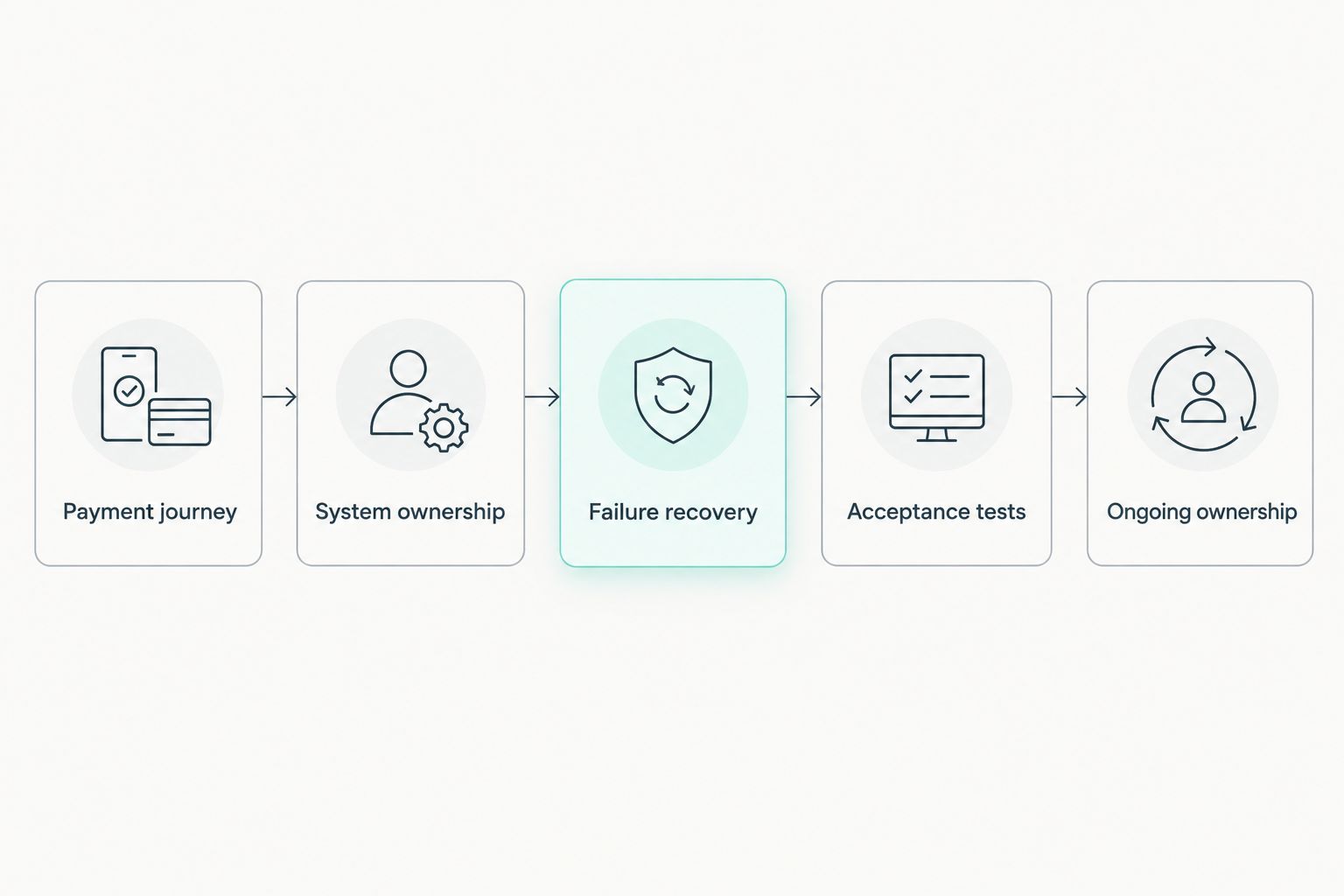
How do you get a comparable integration quote?
Use the same scope document for every supplier. For a 2026 procurement decision, require suppliers to distinguish confirmed requirements from assumptions and discovery questions.
1. Map the payment journey
Write down how a customer reaches checkout, what they pay for, and which event allows your business to fulfill the order or mark the invoice paid. Include cancellation and failure paths alongside success.
Name the business owner for each decision. A developer should not have to decide whether an uncertain payment status permits fulfillment.
2. Define system ownership
Identify where the order, invoice, customer record, and payment reference belong. State which system is authoritative when records disagree.
For broader connection requirements, use the API integration cost guide to frame the surrounding scope. Keep payment-specific responsibilities visible rather than hiding them inside a general integration line item.
3. Specify failure recovery
Describe what happens when notifications repeat, updates arrive late, or a connected application is unavailable. Require duplicate protection for operations that must not run again.
An idempotent operation avoids creating an additional effect when the same request is repeated. Ask the supplier to explain where that protection applies and how failed work gets retried or reviewed.
4. Agree acceptance tests
Define evidence for successful payment, declined payment, cancellation, refund handling, and downstream record updates where those workflows are in scope. Include the expected result and the person authorized to accept it.
Avoid acceptance language such as “payments work.” It leaves the supplier and your team judging different outcomes.
5. Assign ongoing ownership
Document who monitors failures, rotates credentials, reviews provider changes, and responds to incidents. Include access handover and instructions for staff who investigate customer payment questions.
This closes the gap between a delivered integration and an integration your business can operate. The launch decision should include support readiness, not only completed development.
What should your business track after launch?
Choose measures that show whether the integration supports your operating process. Record a baseline from your own business before using those measures to judge improvement.
Useful measures include completed payments against attempted payments, transactions requiring manual investigation, unmatched accounting records, and time spent resolving payment-related support requests. Define each measure carefully: a checkout attempt is not necessarily a customer ready to buy.
Separate technical failures from legitimate payment declines. Your application needs to handle both, but they point to different actions; treating every decline as an integration defect produces misleading reporting.
For your 2026 review, assign an owner to each measure and a response when it changes. A dashboard without an agreed action does not resolve a payment problem.
Does payment processing come with the integration?
Payment processing and integration development are separate purchasing decisions. Your provider's agreement determines processing charges and service terms; your development agreement determines the implementation deliverables.
Read both agreements before approving the project. Ask which provider accounts, extensions, supporting services, and maintenance arrangements your business must manage directly.
Is a hosted checkout enough for invoice payments?
Hosted checkout can fit invoice payments when the chosen provider and your application support the required flow. Specify how the payment links to the invoice, how its status changes, and how staff handle partial or unsuccessful payments if those are required.
Do not judge suitability by the payment page alone. The deciding issue is whether the complete workflow preserves accurate invoice records.
Should you replace a working integration?
Replace a working integration only against a defined business requirement or documented operational problem. Start by identifying failures, unsupported workflows, maintenance constraints, or manual work that the current setup creates.
Compare a targeted fix with replacement before commissioning a rebuild. Both options need acceptance criteria; neither should rely on a general promise of modernization.
FAQ
What's included in payment gateway integration cost?
Payment gateway integration cost covers the implementation work defined in your agreement. Confirm whether discovery, checkout, payment events, refunds, connected systems, testing, release, and support are included or excluded.
Is hosted checkout better than embedded checkout?
Hosted checkout is better suited to standard payment flows when provider-defined behavior meets your needs. Embedded checkout fits an on-site experience but adds interface integration and testing responsibilities.
Do I still have PCI DSS responsibilities with hosted checkout?
Yes, outsourcing payment handling does not remove every PCI DSS responsibility. Confirm your obligations against the actual integration and payment-data flow with your provider or qualified adviser.
Can I connect payment processing to my accounting software?
You can connect payment events to accounting workflows when the systems support the required integration. Define how transactions, refunds, and unmatched records are represented before approving development.
How do I avoid unexpected integration work?
Reduce unexpected work by defining payment flows, exclusions, failure recovery, acceptance tests, and support ownership before development. Require written approval when a requested change alters that scope.
One last thing
A successful payment redirect is not the same as a reliable payment record. Before launch, ask your supplier to demonstrate an interrupted customer session and show how your team establishes the final payment status without guessing.
Approve the workflow your staff can operate, not just the checkout your customer can complete. That test connects the implementation decision to finance accuracy, customer support, and fulfillment.
Related guides
- Best payment gateway platforms for businesses
- How much does ecommerce software development cost?
- How much does custom software development cost?
Schedule a consultation with Hexagon IT Solutions to discuss your payment integration requirements.
Discuss your payment integration scope
Bring your payment journey, connected systems, and operational requirements to the consultation.


