






For manufacturers connecting plant operations with enterprise software, Accenture is the default shortlist choice for enterprise-wide integration; Rockwell Automation fits plant-control-led projects, and Siemens fits Siemens-centered automation environments. The best choice in 2026 depends on where disconnected systems interrupt production, inventory, or financial reporting—not on which company has the longest service list.
- The best system integration companies for manufacturing fit your ERP, plant controls, and operational ownership requirements.
- Accenture fits enterprise-wide programs; Rockwell Automation fits projects centered on industrial controls.
- Siemens fits Siemens-centered environments; Capgemini fits engineering-led programs; Deloitte fits ERP-led business change.
- Require a working failure-recovery demonstration before approving a wider manufacturing integration rollout.
Why this matters
An inventory transaction can complete successfully in one system and still leave production planning wrong in another. Connecting applications is only part of the job; your integration partner must also define which system owns each record and who resolves exceptions.
For a 2026 selection process, separate the business problem from the technology brief. A consultation brief for Hexagon IT Solutions should identify the broken workflow, the systems involved, and the operational result you need—not simply request an integration project.
Start with the consequence: delayed production release, duplicate inventory adjustments, or manual reconciliation. Then identify the handoff responsible. That gives prospective partners a problem they can demonstrate solving.
What makes the best manufacturing integration company?
Evaluate these criteria before comparing company names:
- Manufacturing scope: Distinguish enterprise resource planning, manufacturing execution, warehouse software, and machine controls. They require different implementation skills.
- System ownership: Require an agreed source of truth for items, work orders, inventory movements, and production status.
- Failure recovery: Check how transactions survive outages, retries, duplicates, and partial completion.
- Production protection: Require approved access, test environments, change windows, and rollback procedures.
- Operational handover: Name the people who monitor failures, authorize corrections, and maintain connections after launch.
- Commercial clarity: Separate discovery, implementation, software licensing, support, and later changes in the proposal without treating them as interchangeable work.
For your 2026 evaluation, establish whether the ERP itself needs changing before commissioning its connections. The distinction between integration and replacement matters when assessing custom ERP scope for manufacturing.
Manufacturing integration companies at a glance
These recommendations distinguish project types, not universal winners. The scope boundaries below apply to the proposed engagement; they are not claims that a company cannot perform adjacent work.
| Company | Best for | Relevant service focus | Key scope boundary to resolve |
|---|---|---|---|
| Accenture | Enterprise-wide manufacturing programs | Industry X, enterprise technology, and operating-model change | Define responsibility across enterprise applications and plant systems |
| Rockwell Automation | Plant-control-led integration | Industrial automation and manufacturing operations | Separate controller, execution-system, and business-application responsibilities |
| Siemens | Siemens-centered automation environments | Industrial automation and Digital Enterprise services | Confirm responsibility for connections outside the Siemens environment |
| Capgemini | Engineering-led manufacturing programs | Engineering, manufacturing, and enterprise technology services | Define the handoff between engineering information and production execution |
| Deloitte | ERP-led manufacturing business change | Enterprise applications, operations, and organizational change | Specify how shop-floor integration connects to the ERP program |
1. Accenture: best for enterprise-wide manufacturing integration
Best for: Manufacturers coordinating enterprise applications, plant operations, and business-process change across a broad program.
Accenture's Industry X practice covers digital engineering and manufacturing, alongside its enterprise technology services. That combination makes Accenture a relevant shortlist candidate when integration affects both operational workflows and the wider business architecture.
Consider this route when the decision extends beyond connecting applications. Your program might also require common processes, governance, and coordination among existing technology suppliers.
Accenture pros:
- Relevant service breadth across manufacturing and enterprise technology.
- A fit for a brief spanning operations, engineering, and business systems.
- An option when integration sits within a wider transformation program.
Scope trade-offs:
- A broad program still needs a tightly bounded first release.
- Enterprise architecture approval does not replace plant-level acceptance testing.
Ask the proposed team to identify the owner of a failed production transaction from detection through correction. Require names and responsibilities in the delivery plan, not just a diagram of connected applications.
Verdict: Buy only against a defined enterprise-wide brief with accountable plant-level delivery.
2. Rockwell Automation: best for plant-control-led integration
Best for: Manufacturers whose main integration problem starts with industrial automation, production equipment, or manufacturing operations.
Rockwell Automation's core business centers on industrial automation and digital manufacturing. Put Rockwell Automation on the shortlist when the critical questions concern equipment behavior, production signals, and their connection to operational software.
Define the machine-side requirement first. Reading production status is a different responsibility from changing equipment behavior, and your statement of work should keep that distinction explicit.
Rockwell Automation pros:
- A manufacturing focus grounded in industrial automation.
- Relevant positioning for control-system-led projects.
- A fit when equipment context drives the integration design.
Scope trade-offs:
- A working equipment connection does not establish correct financial posting.
- Machine access requires separate production and safety approvals.
Ask the delivery team to show where plant responsibilities end and enterprise application responsibilities begin. Include ERP transaction validation in acceptance when the project crosses that boundary.
Verdict: Buy for a plant-control-led scope after confirming the complete business-system handoff.
3. Siemens: best for Siemens-centered manufacturing integration
Best for: Manufacturers building an integration program around an existing Siemens automation environment.
Siemens provides industrial automation and Digital Enterprise technologies and services. Siemens belongs on the shortlist when the installed environment makes Siemens-specific system knowledge central to delivery.
Start with an equipment and software inventory, including versions and interfaces. A familiar supplier name does not establish compatibility for every component in your plant.
Siemens pros:
- Direct relevance to Siemens-centered automation environments.
- A portfolio connecting industrial automation and manufacturing software.
- A fit for programs linking engineering and production information.
Scope trade-offs:
- Mixed environments still require explicit third-party interface ownership.
- Existing equipment versions need validation before design approval.
Ask who will implement, test, and support each connection outside the Siemens environment. Also distinguish work delivered directly from work assigned to another delivery organization.
Verdict: Buy when the Siemens environment defines the project and every external interface has an owner.
4. Capgemini: best for engineering-led manufacturing integration
Best for: Manufacturers connecting engineering processes, manufacturing information, and enterprise operations.
Capgemini combines enterprise technology services with the engineering services of Capgemini Engineering. That makes Capgemini a relevant candidate when integration starts upstream of production, with product definitions, engineering changes, or industrial engineering processes.
Your brief should explain which approved engineering information must reach production and what happens when it changes. Otherwise, an interface can move data correctly while leaving the business using the wrong revision.
Capgemini pros:
- Engineering and enterprise technology service coverage.
- Relevant positioning for engineering-to-manufacturing workflows.
- A fit when product information and operational systems intersect.
Scope trade-offs:
- Engineering data transfer alone does not define production approval.
- Revision control needs business rules as well as interface mapping.
Ask for a demonstration of an approved engineering change reaching the operational system. Include the exception path for a change that arrives after production has started.
Verdict: Buy for engineering-led integration with explicit revision and release controls.
5. Deloitte: best for ERP-led manufacturing business change
Best for: Manufacturers whose integration project forms part of an ERP program or operating-process redesign.
Deloitte provides enterprise application, operations, and business transformation services. Deloitte belongs on the shortlist when system connections must support new responsibilities across planning, purchasing, inventory, and finance.
Write the process decisions into the brief. The implementation team needs to know who authorizes adjustments and which system governs each transaction before configuring data movement.
Deloitte pros:
- Enterprise application and operations service coverage.
- Relevant positioning for ERP-centered organizational change.
- A fit when process ownership is central to the project.
Scope trade-offs:
- Process design still requires equipment-level validation where applicable.
- ERP acceptance alone does not establish that production exceptions are handled.
Ask for an end-to-end walkthrough that starts with a shop-floor event and ends with a reconciled business transaction. Include operations and finance in the same acceptance session.
Verdict: Buy for ERP-led change when production integration is an explicit delivery responsibility.
How we ranked these manufacturing integration companies
The 2026 shortlist uses service scope as the deciding criterion. Accenture's Industry X, Rockwell Automation's industrial automation services, Siemens' Digital Enterprise portfolio, Capgemini Engineering, and Deloitte's enterprise application and operations practices establish the relevant categories.
The order moves from enterprise-wide coordination to more specific starting points. It is not a performance score, a customer-satisfaction ranking, or a claim that one provider delivers every manufacturing project better than another.
Use the table to select the appropriate category. Then evaluate the proposed team against your actual systems, acceptance requirements, and support responsibilities.
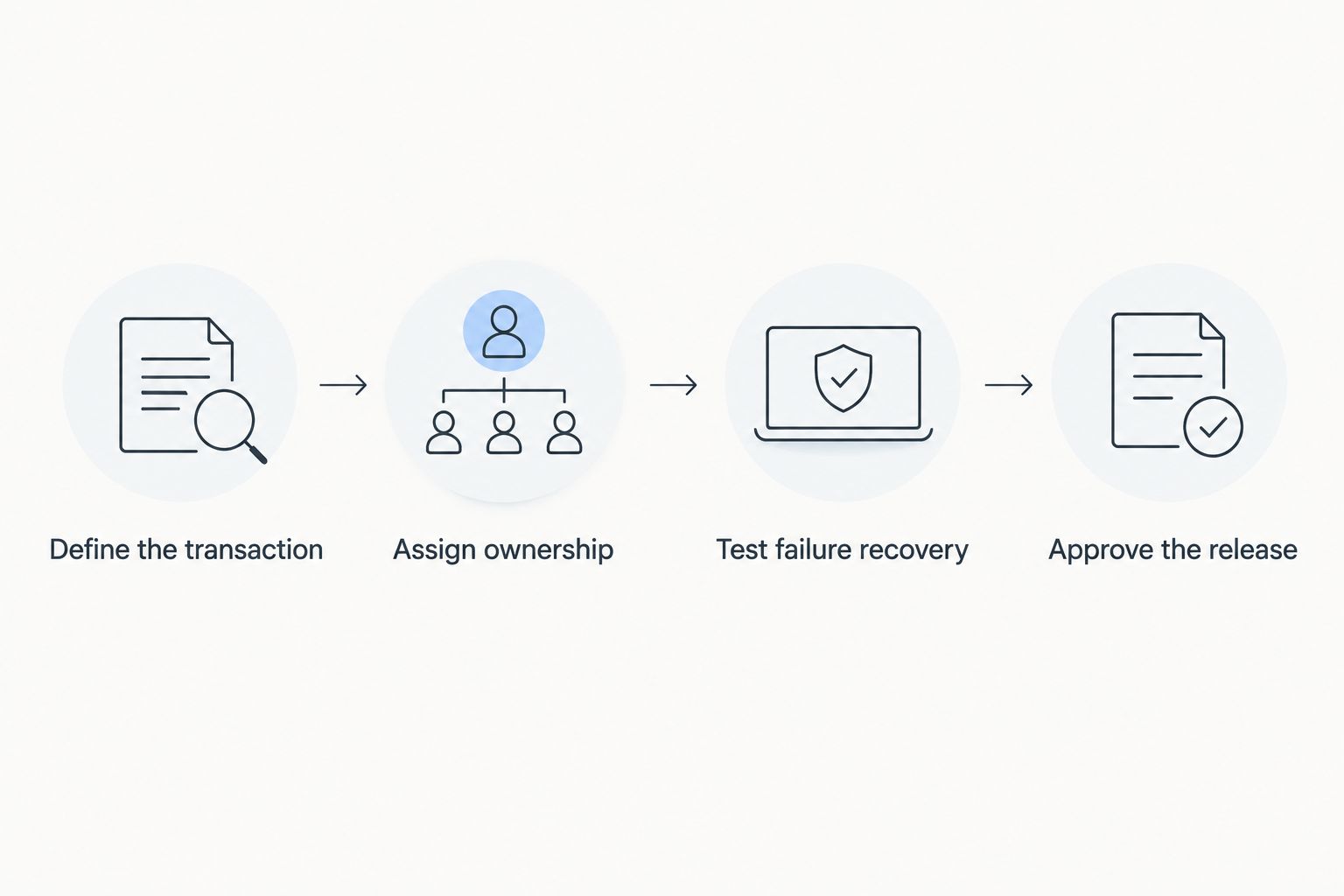
Turn the shortlist into a working acceptance test
A supplier presentation explains an approach. A representative workflow tests whether that approach handles your operating conditions. For your 2026 evaluation, ask each finalist to work through the same brief.
Define the transaction
Choose 1 workflow with an observable business result, such as releasing a production order or posting completed production. Identify the initiating event, required fields, destination record, and evidence of successful completion.
If that workflow depends on equipment data, distinguish data collection from data meaning. For example, unifying sensor data across plants requires consistent equipment identities and operating context; transporting values alone does not make different plants comparable.
Assign ownership
Name 2 accountable owners for the pilot: a business owner who accepts the result and a technical owner who manages transaction handling. Document which system controls each shared field.
Give exceptions the same attention as successful transactions. Someone must decide what happens when production reports an item code the ERP does not recognize.
Test failure recovery
Require demonstrations of 3 failure scenarios: an unavailable destination, a duplicate message, and an invalid record. Define the expected handling before the demonstration starts.
Confirm that a retry does not create a second business transaction. Also require a visible exception queue, an authorized correction process, and a traceable record of what happened.
Approve the release
Approve the pilot only when operations can recognize success, identify failure, and recover through an agreed procedure. Require documentation and ownership before expanding the connection to additional production areas.
Which manufacturing integration company should you choose?
Choose Accenture as the default enterprise-wide shortlist candidate, not as an automatic contract award. Choose Rockwell Automation when the project starts with plant controls, Siemens when the Siemens environment determines the work, Capgemini when engineering information drives the scope, and Deloitte when ERP-led process change sets the requirements.
For a narrower project, ask every candidate to quote the same bounded workflow rather than a vaguely defined transformation. A clear acceptance test makes competing delivery proposals easier to compare.
Your 2026 decision should end with an accountable delivery team, a defined first release, and a support model. A company name is the beginning of due diligence, not its replacement.
FAQ
What's the best system integration company for manufacturing?
Accenture is a default shortlist candidate for enterprise-wide manufacturing integration. Rockwell Automation, Siemens, Capgemini, and Deloitte fit different starting points: plant controls, Siemens-centered environments, engineering, and ERP-led change respectively.
Should a manufacturer choose an ERP integrator or an automation integrator?
Choose according to where the critical work starts. ERP-led projects require business-process and transaction expertise; equipment-led projects require industrial automation expertise, with explicit ownership wherever the two meet.
Can manufacturers connect legacy equipment to modern business software?
Legacy equipment integration depends on the interfaces, access methods, and operating constraints of the installed equipment. Require a feasibility assessment using the actual equipment versions before approving the implementation design.
What should a manufacturing integration pilot prove?
A manufacturing integration pilot should prove that a business transaction completes correctly and recovers safely from failure. Test an unavailable destination, a duplicate message, and an invalid record before approving expansion.
What should be included in a manufacturing integration proposal?
The proposal should define systems, interfaces, data ownership, acceptance tests, delivery responsibilities, and support. It should also distinguish software licensing, implementation work, and later changes so the commercial scope matches the operational scope.
One last thing
A successful connection can still produce an incorrect inventory balance if the same transaction posts twice. Make duplicate handling an acceptance requirement, not a support discussion after launch.
Ask the finalist to interrupt a transaction and then restore service. The most useful demonstration is not that data moves—it is that the business record remains correct after recovery.
Related guides
- Best system integration companies
- How long ERP implementation takes
- Is digital transformation consulting worth it for manufacturers?
Schedule a consultation with Hexagon IT Solutions to discuss your manufacturing integration scope and first workflow.


