






Best overall for full-service hotel operations: Oracle OPERA Cloud. Best for independent hotels: Cloudbeds. Best for automation-focused properties: Mews. Best small-property option: Little Hotelier. The best hospitality management software in 2026 is the system that handles your actual booking, front-desk and reporting workflows without leaving staff to reconcile disconnected records.
- Oracle OPERA Cloud is the best hospitality management software shortlist leader for full-service hotel operations.
- Cloudbeds suits independent hotels seeking property management and distribution in one platform.
- Mews suits properties prioritizing automated hotel workflows and connected applications.
- Little Hotelier suits small accommodation businesses; RMS suits campgrounds and mixed accommodation operations.
- Choose hospitality software through workflow demonstrations, migration planning and integration checks—not feature counts.
Why this matters
A reservation is not just a calendar entry. It affects room assignments, housekeeping, guest communication, payment handling and the information your manager uses to make decisions.
When those records disagree, staff become the integration layer. Your 2026 buying decision should start with the work you need to eliminate, not the longest feature list.
If your problem extends beyond hotel operations into disconnected business systems, Hexagon IT Solutions is a consultation option for defining the technology requirement. A consulting engagement is not a substitute for selecting a property management system that fits your property.
This guide focuses on accommodation businesses. Restaurants, event venues and catering companies need a different shortlist when room inventory and reservations are not central to their operations.
What makes the best hospitality management software?
Use these criteria before comparing vendors. Each one connects a software capability to a business outcome you can assess during a demonstration.
- Operational fit: Your accommodation types, reservation rules and front-desk processes must fit the system without routine workarounds.
- Distribution control: Booking channels and direct reservations need consistent inventory handling. Ask vendors to demonstrate how changes reach connected channels.
- Payment workflow: Staff need a clear process for deposits, balances, cancellations and refunds. Validate the complete transaction, not just payment acceptance.
- Connected systems: Accounting, restaurant operations and other applications need defined data flows. An integration listing does not explain what actually synchronizes.
- Management visibility: Reports should answer your operating questions without repeated spreadsheet reconstruction. Test the reports your managers use to make decisions.
- Implementation ownership: Data migration, staff training and configuration need named owners. A capable system still needs a workable transition plan.
Pick the platform that passes your hardest workflow, not the platform with the most features. That rule matters more than a generic ranking because different accommodation businesses have different operating constraints.
Hospitality management software at a glance
The table separates the options by operating model. It is a selection guide, not a claim that every property needs the same system.
| Software | Best for | Standout capability | Key selection constraint |
|---|---|---|---|
| Oracle OPERA Cloud | Full-service hotel operations | Hotel property management within Oracle Hospitality's ecosystem | Scope implementation and connected systems before committing |
| Cloudbeds | Independent hotels | Property management, distribution and direct-booking tools | Confirm specialized departmental requirements individually |
| Mews | Automation-focused properties | Cloud property management with connected applications and payment workflows | Automation depends on configuration and application fit |
| Little Hotelier | Small accommodation businesses | Reservation and distribution tools aimed at smaller properties | Do not assume a small-property platform fits complex operations |
| RMS | Campgrounds and mixed accommodation operations | Property management across different accommodation formats | Validate inventory rules for every accommodation type |
For your 2026 shortlist, use each vendor's official product documentation to establish scope: Oracle Hospitality for OPERA Cloud, Cloudbeds for its platform, Mews for its hospitality platform, Little Hotelier for its small-property tools, and RMS for its property management system. Use the demonstration to resolve property-specific questions that product descriptions cannot answer.
1. Oracle OPERA Cloud: best for full-service hotel operations
Oracle OPERA Cloud is a cloud-based hotel property management system from Oracle Hospitality. It addresses core hotel work such as reservations, front-desk operations and guest records. Start here when you need to evaluate a hotel-focused operating platform rather than a lightweight booking tool.
Best for: Full-service hotels that need to assess detailed hotel workflows and connected departmental systems.
The business question is whether the proposed configuration supports your operation from reservation through checkout. For a 2026 evaluation, include a booking change, room reassignment, payment adjustment and final account review in the same demonstration.
Oracle OPERA Cloud pros
- Hotel property management is the product's central purpose.
- Reservation and front-desk workflows sit within a hotel-focused system.
- Oracle Hospitality offers a wider ecosystem to evaluate alongside the PMS.
Oracle OPERA Cloud cons
- A broad hotel platform requires careful implementation scoping; software selection does not settle configuration decisions.
- Connected products and integrations still need individual validation. Do not assume the PMS alone covers every department.
Ask the vendor to separate the core PMS, additional products, integration responsibilities and implementation tasks in the proposal. Your operations lead should understand that boundary before IT approves the architecture.
Verdict: Buy Oracle OPERA Cloud when your full-service workflow passes the demonstration and the implementation scope is clear.
2. Cloudbeds: best for independent hotels
Cloudbeds combines property management, distribution and direct-booking tools in a hospitality platform. That makes it a useful starting point for independent hotels evaluating how reservations reach the property and how staff manage them afterward.
Best for: Independent hotels seeking a connected reservation and distribution workflow.
The practical benefit is the ability to evaluate booking operations together rather than selecting each component in isolation. Your demo should follow a reservation from a connected channel into the property workflow, then show what happens when the guest changes the stay.
Cloudbeds pros
- Property management and distribution are part of the platform's scope.
- Direct-booking tools support evaluation of the property's own reservation channel.
- A combined platform lets buyers assess several core booking functions together.
Cloudbeds cons
- A connected booking platform does not automatically satisfy specialized restaurant, event or accounting requirements.
- Connected-channel behavior needs testing against the channels and reservation rules your property actually uses.
For a 2026 decision, ask your reservations manager to demonstrate the exception cases, not just a clean booking. Include a cancellation, a room-type change and the management report that should reflect those changes.
Verdict: Buy Cloudbeds when independent-hotel booking and distribution are your main requirements and the exceptions work correctly.
3. Mews: best for automation-focused properties
Mews is a cloud hospitality platform with property management, payment workflows and a marketplace of connected applications. It belongs on your shortlist when your priority is redesigning routine hotel work rather than simply replacing the existing system.
Best for: Properties that want to assess automated workflows and an application-connected operating model.
Automation creates business value only when it removes a defined task without creating a new reconciliation problem. Ask Mews to demonstrate the exact handoff you want to change, including what staff do when the automated path cannot complete.
Mews pros
- Property management and payment workflows can be evaluated together.
- Its connected-application marketplace supports investigation of surrounding system requirements.
- Its automation focus makes workflow redesign a useful demonstration topic.
Mews cons
- Automation still requires operating rules, configuration and exception handling.
- A marketplace connection is not proof that an application exchanges every field your business needs.
Separate automation from guest experience. A property can automate back-office tasks while retaining personal service; the decision should reflect where your staff add value and where they merely transfer information.
Verdict: Buy Mews when the demonstrated automation removes your identified manual tasks and preserves a clear exception process.
4. Little Hotelier: best for small accommodation businesses
Little Hotelier provides reservation, front-desk, channel management and direct-booking tools aimed at smaller accommodation businesses. It is a relevant option for owners who need organized booking operations without starting from a full-service hotel's requirements.
Best for: Small hotels, bed-and-breakfasts and similar accommodation businesses.
The buying question is not whether a smaller-property system has fewer features. It is whether your team can complete its daily work clearly and consistently, including when the owner is not available to resolve a problem.
Little Hotelier pros
- Its stated focus is smaller accommodation businesses.
- Front-desk and reservation tools address everyday property administration.
- Channel management and direct-booking tools belong in the same evaluation.
Little Hotelier cons
- Its small-property focus is not evidence of suitability for complex departmental operations.
- Future expansion needs a fresh requirements check rather than an assumption that the original setup will fit.
Have the person who handles arrivals use the proposed workflow during the demonstration. An owner-friendly overview is not enough if other staff cannot confidently change a reservation or find the guest's account.
Verdict: Buy Little Hotelier when your small-property workflows fit; skip it as a default for complex hotel operations.
5. RMS: best for campgrounds and mixed accommodation
RMS provides property management software for accommodation businesses, including hotels, holiday parks and campgrounds. Its relevance here is the need to manage accommodation formats that do not all behave like standard hotel rooms.
Best for: Campgrounds, holiday parks and operators managing different accommodation types.
A cabin and a campsite can have different booking rules and operational requirements. Your software evaluation needs to reflect those distinctions rather than forcing every inventory item through a generic hotel-room demonstration.
RMS pros
- Its property management scope includes campground and holiday-park operations.
- Different accommodation formats can form part of the same vendor evaluation.
- Reservation management remains central to the operating requirement.
RMS cons
- Support for an accommodation category does not prove that every property-specific rule is supported.
- Mixed inventory requires careful configuration and reporting checks.
Ask RMS to demonstrate each accommodation type you manage, including the rules that differ between them. Then inspect the combined management report to confirm that the result makes sense to your operations team.
Verdict: Buy RMS when its demonstrated inventory rules fit your campground or mixed-accommodation operation.
How the ranking works
These recommendations prioritize operational fit, reservation handling, connected systems and implementation clarity. They do not claim measured implementation speed, customer satisfaction or financial returns.
Oracle OPERA Cloud leads the full-service hotel shortlist; the remaining choices serve distinct operating models. There is no universal winner across a full-service hotel, a small bed-and-breakfast and a campground.
Your 2026 selection should follow the same principle: compare vendors against your requirements, not against an abstract feature total.
Turn the shortlist into a buying decision
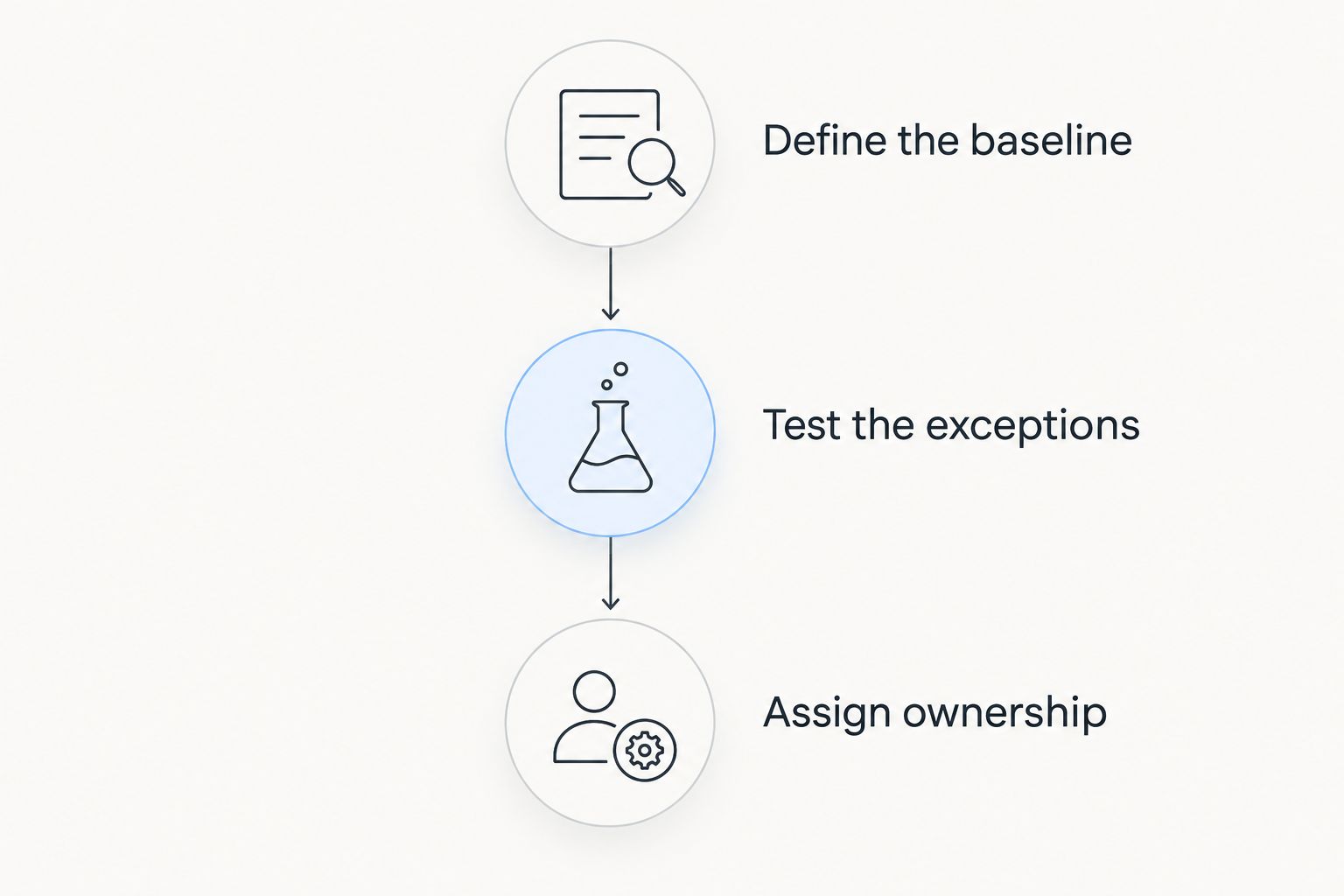
Define the baseline
Start with 1 property for the evaluation. Document its accommodation types, booking channels, payment steps and reporting needs before adding group-wide requirements.
Write down the manual work you want to remove. A useful requirement describes the task, the responsible employee and the expected result—not simply a request for automation.
Test the exceptions
Prepare 2 test reservations: a straightforward stay and a booking with a change or cancellation. Use identical scenarios across the shortlisted vendors so the comparison remains meaningful.
Watch who corrects the record, where the adjustment appears and whether staff need another application to finish. Those observations reveal workflow boundaries more clearly than a feature checklist.
Assign ownership
Validate 3 workflows before approval: reservations, payment reconciliation and management reporting. Give each workflow an internal owner who can accept or reject the demonstrated result.
Keep implementation responsibilities separate from product capabilities. Ask who prepares migration data, configures the system, trains staff and confirms that connected applications work. An unanswered ownership question remains a buying risk even when the demonstration looks convincing.
Which hospitality management software should you choose?
Choose Oracle OPERA Cloud as the starting point for a full-service hotel evaluation. Choose Cloudbeds for independent-hotel booking and distribution, Mews for automation-focused workflows, Little Hotelier for small-property operations, and RMS for campground or mixed-accommodation requirements.
For an undecided independent hotel, start with Cloudbeds and compare alternatives only against unmet requirements. For a different operating model, use the corresponding specialist shortlist rather than stretching the default recommendation.
FAQ
What's the best hospitality management software in 2026?
Oracle OPERA Cloud is the strongest starting point in this guide for full-service hotel operations. Cloudbeds, Mews, Little Hotelier and RMS serve different operating models, so the final choice depends on your property's workflows.
What's the best hospitality software for a small hotel?
Little Hotelier is this guide's small-property recommendation. Confirm that its reservation, front-desk and distribution workflows match how your accommodation business operates.
Is Cloudbeds better than Mews?
Cloudbeds is the recommendation here for independent-hotel booking and distribution; Mews is the recommendation for automation-focused workflows. Compare both using the same reservation changes, payment exceptions and reporting requirements.
Do I need a CRM as well as a hotel property management system?
You need a separate CRM only when customer-management requirements extend beyond what your chosen PMS supports. Define sales follow-up, account ownership and data-sharing needs before adding another system.
What should I check before replacing hospitality software?
Check workflow fit, migration responsibilities, connected applications, payment reconciliation and staff readiness before replacing hospitality software. Require a demonstrated result and an internal owner for each critical workflow.
One last thing
Test a canceled booking before celebrating a successful one. A clean reservation shows the intended path; an exception shows who owns the work when the process changes.
Related guides
- Best CRM software for small businesses
- Best POS systems for retail businesses
- Best digital transformation consulting firms
Schedule a technology consultation
Discuss your hospitality workflows and system requirements with Hexagon IT Solutions.


