





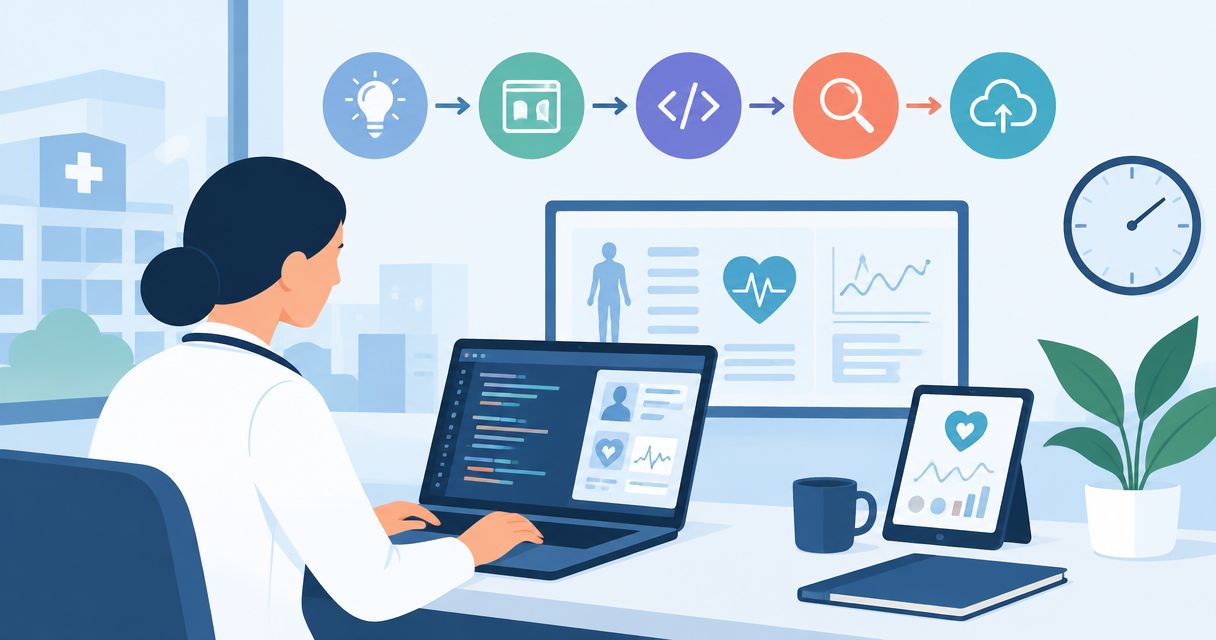
Healthcare software development takes as long as the agreed scope, integrations, testing and release approvals require; there is no single duration that fits every project. For your 2026 launch plan, separate a working demonstration from software ready for live patient data, staff use and operational support.
- How long does healthcare software development take? Estimate against defined release criteria, not a generic calendar range.
- Separate prototype completion, pilot readiness and production launch when comparing healthcare software development proposals.
- Confirm integration access and security requirements before accepting a delivery commitment.
- Ask Hexagon IT Solutions for a consultation when defining your healthcare software development brief.
Why this matters
A launch date means little unless everyone agrees on what launches. A demonstration that uses fictional records has a different acceptance standard from a patient-facing application connected to an electronic health record system.
Compare delivery commitments against the same release definition. Otherwise, a short proposal can exclude data migration, security review, user training or production deployment without making that exclusion obvious.
If connected systems sit inside your scope, the system integration guide for healthcare organizations helps frame the interfaces you need to discuss before setting a deadline.
How long does healthcare software development take?
The defensible answer is a project-specific schedule built around verifiable milestones. Start with the intended release, work backward through its dependencies, and distinguish work your development team controls from approvals owned by other organizations.
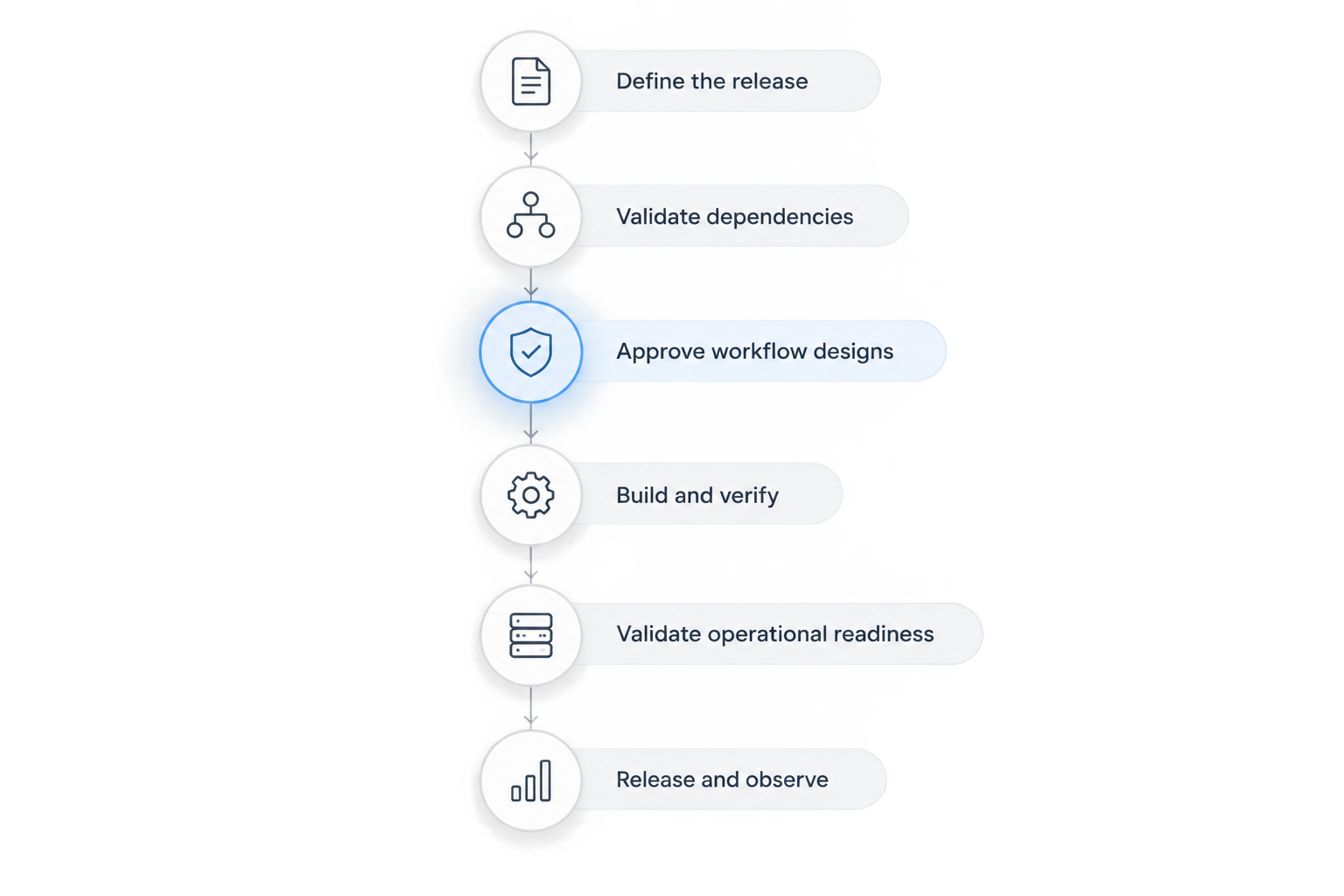
For a 2026 procurement decision, request the following sequence rather than an unsupported promise of a standard delivery window:
- Define the release. Name the users, workflows, supported devices and data involved. State what the release deliberately excludes.
- Validate dependencies. Confirm access to external systems, test environments, documentation and the people authorized to approve access.
- Approve workflow designs. Walk through normal tasks, mistakes, exceptions and recovery paths with the people doing the work.
- Build and verify. Implement the agreed scope and test functionality, permissions, integrations and failure handling.
- Validate operational readiness. Complete user acceptance, relevant security reviews, migration checks, support preparation and release approval.
- Release and observe. Deploy with a rollback plan, monitor the agreed outcomes and assign ownership for issues.
These activities can overlap where dependencies allow. Do not add their durations mechanically: the launch date follows the longest dependent chain of work, including external waiting periods.
Prototype: prove the workflow before production
A prototype is best for checking whether users understand a proposed workflow before you commit to a production build. It can demonstrate navigation, information hierarchy and task completion without connecting live systems or processing real patient information.
Its limitation is equally important: prototype approval is not production approval. A convincing interface does not establish that permissions, data handling, integrations or recovery procedures work.
Ask the proposal to distinguish disposable demonstration work from components intended for production. Otherwise, you risk treating an early design milestone as evidence that the application is almost ready to launch.
Pilot: validate a restricted operational release
A pilot is best for testing an agreed workflow with a defined user group and support process. Specify which users participate, which records enter the system, what existing process remains available and who can stop the pilot.
A restricted rollout reduces the scope of exposure, but it does not remove obligations associated with the data and activities involved. If the pilot handles protected health information, address the applicable privacy and security requirements before using that information.
Set exit criteria before the pilot begins. Completion should depend on evidence that the workflow is acceptable, not simply on reaching a scheduled review meeting.
Production release: include the operating model
A production release is best for a workflow that has a named business owner, defined acceptance criteria and an agreed support model. Your schedule must include more than application development.
Clarify who handles access requests, failed transactions, incidents, backups and release decisions. Record which tasks belong to your organization, the development partner and any connected-system provider.
The tradeoff is greater preparation before launch. That preparation makes the release commitment more meaningful because the schedule includes the work required to operate the software, not merely demonstrate it.
| Release type | Best for | Main benefit | Main limitation | Evidence required |
|---|---|---|---|---|
| Prototype | Checking a proposed workflow | Tests the design before a production commitment | Does not establish operational readiness | Approved workflow and documented feedback |
| Pilot | Validating a restricted operational workflow | Tests use within defined boundaries | Requires support and applicable data safeguards | Agreed acceptance results and issue decisions |
| Production release | Supporting an approved business process | Establishes an operational release | Requires deployment and ownership preparation | Release approval, support ownership and recovery plan |
Why healthcare software development timelines vary
The relevant question is not whether healthcare software is inherently slow. It is which unresolved decisions or dependencies prevent your specific release from moving forward.
Use these factors to challenge a proposed 2026 schedule:
- Workflow scope: Scheduling an appointment and managing a clinical handoff involve different tasks, exceptions and acceptance decisions. Describe the actual process rather than relying on a feature name.
- External integrations: Access credentials, documentation, test environments and approval processes affect when connected workflows can be verified. Assign owners to these dependencies.
- Data migration: Historical records need agreed mappings, validation rules and reconciliation. Decide what moves and how you will confirm that the result is correct.
- Privacy and security requirements: Data access, information flows and applicable obligations shape implementation and review work. Establish the requirements before approving the design.
- User acceptance: Staff need to validate realistic workflows, including errors and exceptions. Their availability belongs in the schedule.
- Deployment constraints: Release windows, operational coverage and rollback decisions affect when approved software can enter service. Development completion alone does not resolve them.
Ask each owner to confirm their dependency before treating its date as committed. An assumption recorded in a proposal is still an assumption until the responsible party accepts it.
What should a credible development estimate include?
A credible estimate explains what the team will deliver, what must already be available and what changes the commitment. It should let you identify a missed dependency before it becomes a missed launch.
For a 2026 statement of work, require these items:
- Included workflows: Describe the user tasks the release must support.
- Explicit exclusions: Name deferred functionality, historical data and unsupported environments.
- Milestone evidence: State what you can inspect or approve at each checkpoint.
- Dependency owners: Identify who supplies access, decisions, records and approvals.
- Acceptance criteria: Define the conditions that make the release acceptable.
- Change control: Explain how a scope change affects the delivery plan.
A milestone called development complete is insufficient on its own. Ask whether it includes integration verification, defect resolution and user acceptance, or whether those remain separate activities.
The same distinction applies beyond healthcare; the guide to custom software development timelines addresses the broader planning question. For healthcare projects, add the specific data, clinical and operational review requirements that apply to your intended use.
How do security and integration reviews affect the launch date?
Security and integration reviews need explicit entry conditions. A review cannot validate a workflow that is still changing, and an integration test cannot establish correct behavior without an agreed environment and representative test cases.
For your 2026 release plan, distinguish implementation work from independent review and remediation. If a review identifies a problem, the schedule must account for fixing it and checking the result rather than treating the review meeting as the finish line.
In a release plan, HIPAA compliance and penetration testing address different questions: penetration testing examines exploitable technical weaknesses, while HIPAA compliance involves broader applicable privacy, security and organizational obligations. Passing a penetration test does not, by itself, establish HIPAA compliance.
Use this review sequence:
- Document the information the application receives, stores and sends.
- Define authorized access and the actions each role can perform.
- Verify normal workflows and relevant failure cases.
- Complete the reviews appropriate to the application and its intended use.
- Resolve findings and record the release decision.
Do not assume every healthcare application follows the same regulatory path. Determine whether the intended function raises medical-device or other regulatory questions with qualified advisers before committing to a launch date.
How can you shorten development without removing safeguards?
Reduce the release scope before reducing verification. A smaller, complete workflow is a clearer delivery target than a broad collection of partially implemented features.
Start with the business outcome. If the immediate goal is to eliminate duplicate appointment entry, define the specific handoff, required fields, error handling and responsible users instead of adding unrelated reporting and patient engagement features to the same release.
Then remove avoidable waiting:
- Name a decision-maker who can approve workflow choices.
- Arrange external-system access before integration work depends on it.
- Prepare representative test data without exposing patient information unnecessarily.
- Schedule user acceptance with staff who perform the workflow.
- Record decisions so approved requirements do not repeatedly reopen.
Each action addresses a planning dependency, not a promised duration reduction. Ask the delivery team to show which task moves earlier and which release condition remains unchanged.
Can you start before every requirement is finalized?
You can start discovery and workflow validation before every detail is finalized. Keep that work separate from an unconditional commitment to deliver an undefined production scope.
Early work should produce decisions: an agreed workflow, a data-flow map, a dependency register and testable acceptance criteria. Those outputs give the development team a stronger basis for estimating implementation.
Approve uncertainty-reducing work before approving an uncertain launch promise. If an unresolved integration determines the architecture, investigate that integration before treating the architecture and delivery date as settled.
What should you ask a development partner before signing?
Ask the partner to explain the schedule through evidence, not confidence alone. The strongest discussion connects each milestone to an observable result and a named approver.
Bring these questions to a consultation with Hexagon IT Solutions:
- What exactly must be true before production launch?
- Which dependencies are outside the development team's control?
- What evidence supports the integration assumptions?
- Who approves clinical or operational workflow decisions?
- What happens when acceptance testing identifies a blocking issue?
- Which activities continue after deployment, and who owns them?
Compare the answers against your organization's capacity to participate. A supplier cannot approve your workflows, provide access to systems it does not control or make internal ownership decisions on your behalf.
FAQ
How long does healthcare software development take from start to launch?
Healthcare software development requires a project-specific schedule based on scope, dependencies and release criteria. Separate discovery, implementation, verification and operational readiness when evaluating a launch commitment.
Is a healthcare software prototype ready for patient use?
A healthcare software prototype is not automatically ready for patient use. Confirm data safeguards, permissions, testing, support and applicable approvals before treating it as an operational release.
Can a healthcare software pilot use real patient data?
A pilot can use real patient data only when the organization has established the applicable safeguards, permissions and legal basis. Calling software a pilot does not remove obligations associated with protected health information.
Does passing a penetration test mean software is HIPAA compliant?
Passing a penetration test does not establish HIPAA compliance. Technical testing addresses only part of the broader privacy, security and organizational requirements that can apply.
What is the safest way to bring a healthcare software launch forward?
Reduce the agreed release scope while retaining the verification and safeguards required for that release. Validate external dependencies early and assign owners to acceptance and deployment decisions.
One last thing
Ask for a launch-readiness checklist before asking for a faster date. If nobody can state who accepts the software, what evidence they need and how the organization will recover from a failed release, the calendar is hiding unresolved decisions.
Your most useful planning document is not the most detailed schedule. It is the schedule whose assumptions, owners and completion criteria you can verify.
Related guides
- Mobile app development for healthcare providers
- Healthcare software development companies
- How long does a system integration project take?
Schedule a consultation with Hexagon IT Solutions to discuss your healthcare software scope, dependencies and release criteria.


