





Replacing mortgage software without separating loan production from borrower intake creates the wrong shortlist. Best overall for full loan origination: ICE Encompass; best for bank and credit union origination: MeridianLink Mortgage; best for borrower intake: Blend Mortgage; best for relationship management: Salesforce Financial Services Cloud.
- ICE Encompass leads this best mortgage software for lenders shortlist when full loan origination is the priority.
- MeridianLink Mortgage fits banks and credit unions evaluating mortgage origination alongside their broader lending operations.
- Blend Mortgage addresses borrower intake; Salesforce Financial Services Cloud addresses relationship management.
- Choose mortgage software by workflow ownership, integration requirements, and demonstrated results—not feature counts.
Why this matters
A loan origination system, borrower application platform, and CRM solve different problems. Comparing them as substitutes leaves you with impressive demonstrations but no clear answer about who owns the loan record, outstanding documents, or the next borrower follow-up.
For your 2026 selection, start with the bottleneck: application completion, loan processing, relationship management, or disconnected systems. If your decision includes integration and implementation planning, Hexagon IT Solutions is the consultation route—not another mortgage platform in this ranking.
This guide ranks platforms by their role in the lending workflow. It does not treat a borrower-facing application or CRM as a replacement for a full origination system.
What makes the best mortgage software for lenders?
Judge mortgage software against these criteria before comparing demonstrations. The strongest choice is the platform that owns the work you need to improve without creating another disconnected record.
- Workflow ownership: Identify whether the platform owns origination, borrower intake, or relationship management. Define where its responsibility ends.
- Record integrity: Require a clear source of truth for borrower details, application status, documents, and assigned responsibilities.
- Integration fit: Have the vendor demonstrate connections to your actual systems. Separate existing connections from development work.
- User execution: Watch a loan officer, processor, or borrower complete a task. A feature list does not show how work gets done.
- Control and visibility: Review permissions, change history, exception handling, and reporting against your operating requirements.
- Implementation economics: Compare migration, configuration, training, ongoing administration, and support—not just the software agreement.
Your 2026 buying decision should follow workflow fit first, implementation feasibility second, and commercial evaluation third. A familiar platform name does not resolve a broken handoff.
Mortgage software platforms at a glance
| Platform | Best for | Standout role | Key scope boundary |
|---|---|---|---|
| ICE Encompass | Full loan origination | Mortgage loan production and origination workflow | Evaluate borrower intake and CRM requirements separately |
| MeridianLink Mortgage | Bank and credit union origination | Mortgage origination within a broader lending technology evaluation | Confirm connections to the institution's existing systems |
| Blend Mortgage | Borrower intake | Digital mortgage application experience | Define the handoff to the origination system |
| Salesforce Financial Services Cloud | Relationship management | Financial-services customer and relationship records | Keep mortgage origination responsibility clearly assigned |
The table is a decision tree, not a claim that every lender needs every platform. Choose an origination system when production is the problem; choose an intake or relationship platform when that specific workflow needs attention.
1. ICE Encompass: best mortgage software for full origination
ICE Encompass is a mortgage loan origination platform. It belongs at the top of this shortlist when your decision concerns the system used to manage loan production, rather than only the borrower application or sales relationship.
The business question is straightforward: can your lending team run its required origination workflow in the system, with clear ownership and dependable records? Make the demonstration follow a loan through your actual stages instead of accepting a tour of unrelated features.
ICE Encompass pros:
- Its mortgage-specific purpose matches a full origination-system evaluation.
- Loan production provides a clear center for assessing workflow ownership.
- It gives you a relevant starting point when replacing the core origination platform.
ICE Encompass cons and scope checks:
- An origination platform selection does not settle every borrower-experience or CRM requirement.
- Migration, configuration, and operational changes need their own evaluation alongside the software.
Ask the vendor to show an application moving into processing, a document exception reaching the responsible person, and a changed borrower detail reaching connected systems. Record each manual step and identify whether it comes from software configuration, integration, or your current operating process.
Best for: Lenders selecting the core system for mortgage origination.
Verdict: Buy for full-origination needs after the platform demonstrates your required workflow and integration requirements.
2. MeridianLink Mortgage: best for bank and credit union origination
MeridianLink Mortgage is a mortgage origination platform. It is a relevant shortlist choice for banks and credit unions considering how mortgage lending fits their wider lending technology environment.
For these institutions, the decision extends beyond the mortgage department. Customer records, access controls, data exchanges, and reporting need to work within the institution's operating model; shared vendor branding alone does not prove that connection.
MeridianLink Mortgage pros:
- Its mortgage origination role matches a core lending-system evaluation.
- Its institutional lending context makes it relevant to banks and credit unions.
- It supports a focused discussion about mortgage workflow within a broader lending stack.
MeridianLink Mortgage cons and scope checks:
- Existing institutional systems still need explicit integration validation.
- Mortgage requirements need a dedicated evaluation rather than assumptions based on other lending workflows.
Have operations and IT attend the same demonstration. Ask them to trace customer information from its source to the mortgage record, then check how corrections, permissions, and exceptions are handled.
For a 2026 shortlist, request evidence for each required connection. Classify it as an existing integration, configuration work, or a development project so implementation responsibilities remain visible.
Best for: Banks and credit unions evaluating mortgage origination within their institution's lending environment.
Verdict: Buy for institutional origination needs when mortgage workflows and system connections satisfy the same acceptance criteria.
3. Blend Mortgage: best for digital borrower intake
Blend Mortgage provides a digital mortgage application experience. It belongs on your shortlist when the problem is how borrowers begin and complete an application, rather than replacement of the core origination system.
Its role is borrower-facing intake. Evaluate that role through application completion, information capture, and the handoff into your loan production process—not through an assumption that a better application screen fixes every downstream task.
Blend Mortgage pros:
- Its borrower-facing purpose fits an application-experience evaluation.
- It separates intake decisions from core origination-system replacement.
- Its workflow role gives you a clear point at which to test downstream handoffs.
Blend Mortgage cons and scope checks:
- Borrower intake is not the same purchasing category as complete loan origination.
- The receiving system and your team still need defined responsibilities for processing and exceptions.
Start the demonstration as a borrower, not an administrator. Enter an application, stop before completion, return to it, and follow the submitted information into the receiving workflow.
Then switch to the employee view. Check who sees incomplete work, who follows up, and whether staff must re-enter information. The result you need is a connected intake process, not simply a polished application interface.
Best for: Lenders improving the borrower application experience while retaining a separately defined origination system.
Verdict: Buy for borrower-intake needs after demonstrating the complete handoff into loan production.
4. Salesforce Financial Services Cloud: best for relationships
Salesforce Financial Services Cloud is a financial-services relationship-management platform. It belongs in this comparison when your priority is managing customer relationships, sales activity, and follow-up rather than running the mortgage origination process itself.
The value comes from organizing relationship work around a customer record. Keep loan production responsibility explicit so a relationship platform does not become an unofficial second origination system.
Salesforce Financial Services Cloud pros:
- Its financial-services focus fits a relationship-management evaluation.
- Customer and relationship records provide a foundation for coordinated follow-up.
- It separates relationship management from the transactional origination decision.
Salesforce Financial Services Cloud cons and scope checks:
- CRM scope does not replace the need to evaluate mortgage origination separately.
- Configuration and integration decisions need clear ownership to prevent competing records.
Ask the vendor to demonstrate a new inquiry, an assigned follow-up, and a loan-status update from the production system. Check which information employees enter directly and which information arrives through an integration.
Your acceptance criteria should cover record ownership and employee behavior. If a loan officer must maintain the same status in separate systems, define which record controls the workflow before approving the design.
Best for: Lenders prioritizing customer relationships, sales coordination, and follow-up alongside a separate origination platform.
Verdict: Buy for relationship-management needs; keep loan origination in a system evaluated for that responsibility.
How the platforms are ranked
The ranking uses product role and workflow fit: full origination first, institutional origination next, then borrower intake and relationship management. These are distinct buying decisions, not interchangeable feature bundles.
The platform descriptions follow the named vendors' product categories: ICE Encompass, MeridianLink Mortgage, Blend Mortgage, and Salesforce Financial Services Cloud. This 2026 guide ranks category fit rather than measured implementation performance or customer results.
Test the shortlist against your actual workflow
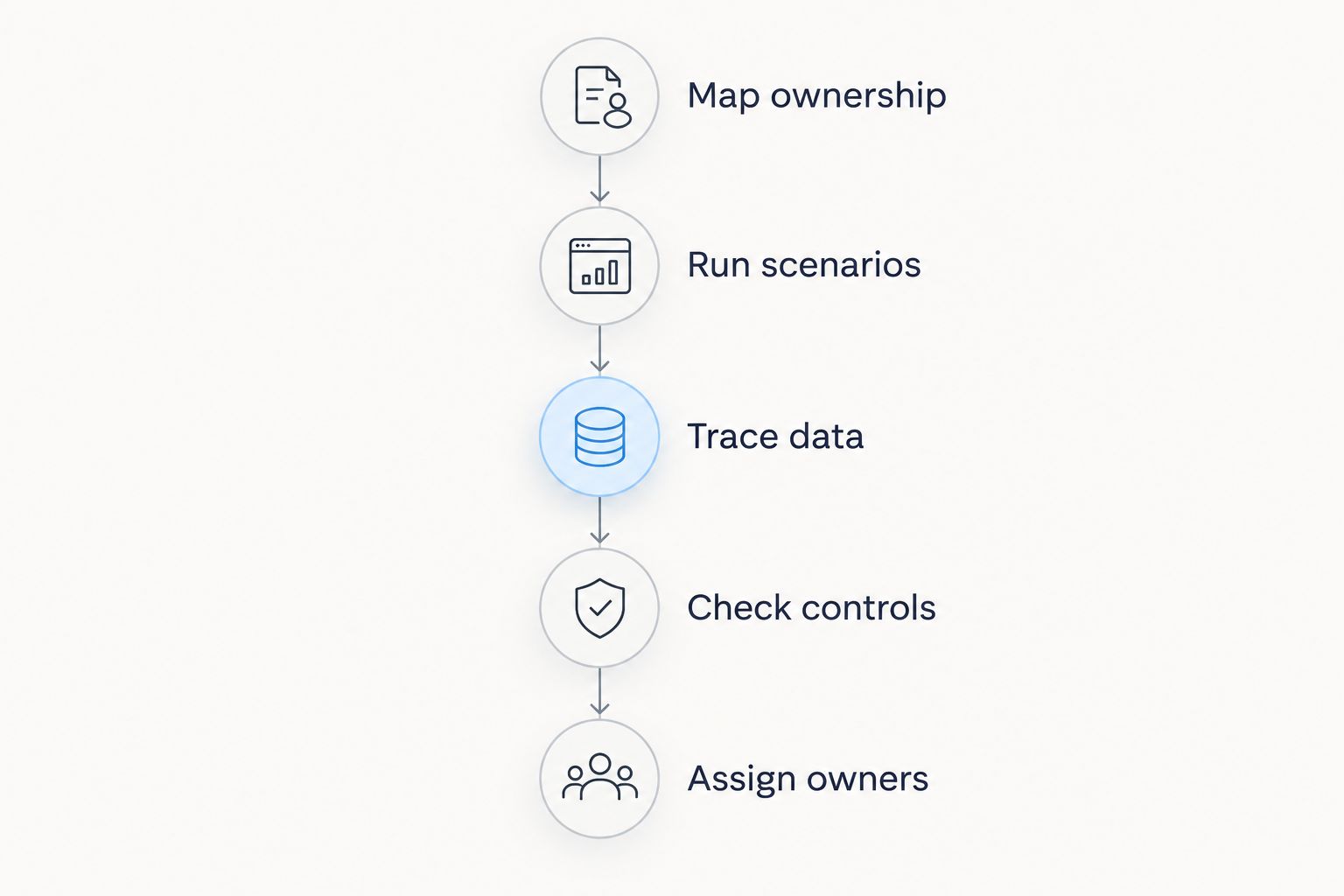
Recommend a 30-day evaluation window, not as a promised implementation timeline, but as a deadline for resolving the buying questions. Assign an operational owner and an IT owner before requesting demonstrations.
Map ownership
List the records each platform would own: customer, application, loan status, documents, and follow-up tasks. Write down the responsible team and the rule for resolving conflicting updates.
Run scenarios
Use a 60-minute workflow demonstration built around your requirements. Include application submission, a document exception, and a status correction; these scenarios expose handoffs that a standard presentation skips.
Trace data
Follow information across every proposed connection. Ask what triggers a transfer, how failures become visible, and who corrects them; do not accept an integration logo as evidence that your process works.
Check controls
Review access by role and inspect how changes are recorded. Ask your legal, compliance, and security owners to validate requirements rather than treating a vendor statement as your approval.
Assign owners
Name the people responsible for migration, configuration, training, support, and ongoing administration. An implementation plan without accountable owners is not ready for approval.
Use a 5-point scorecard, with each criterion scored from unmet to demonstrated: workflow ownership, record integrity, integration fit, user execution, and control visibility. Attach demonstration evidence to each score so procurement can distinguish a proven requirement from a sales commitment.
Which mortgage software should you choose?
Choose ICE Encompass as the default shortlist starting point when you need a full mortgage origination system. Choose MeridianLink Mortgage when bank or credit union lending context shapes the origination decision.
Choose Blend Mortgage when borrower intake is the problem. Choose Salesforce Financial Services Cloud when customer relationships and follow-up are the problem; neither decision should obscure ownership of the production loan record.
For your 2026 selection, approve the platform role before approving the platform. That keeps the buying decision tied to the operational problem you intend to solve.
FAQ
What's the best mortgage software for lenders in 2026?
ICE Encompass is this guide's default shortlist starting point for full mortgage origination. MeridianLink Mortgage fits bank and credit union origination evaluations, while Blend Mortgage and Salesforce Financial Services Cloud address intake and relationship management respectively.
Is mortgage CRM the same as a loan origination system?
No. A mortgage CRM organizes relationships and follow-up, while a loan origination system manages the origination workflow. Define which system owns each record before connecting them.
Should a lender replace its origination system to improve applications?
Not automatically. Evaluate whether the problem sits in borrower intake, the handoff, or loan production before selecting a replacement. Blend Mortgage belongs in an intake evaluation; a core origination replacement is a separate decision.
How should lenders compare mortgage software costs?
Compare the complete implementation and operating commitment, not only the software agreement. Request current commercial terms and account for migration, integrations, configuration, training, administration, and support.
What should a mortgage software demonstration include?
A mortgage software demonstration should show application submission, a document exception, and a status correction across connected systems. Record manual steps, failure handling, and the employee responsible for resolving each exception.
One last thing
Before signing, ask someone to change a borrower detail after application submission. Then watch where the correction travels and who must act.
That specific test checks whether the proposed design has a clear source of truth. Put the expected result in the acceptance criteria, not just the meeting notes.
Related guides
- Best CRM software for small businesses
- Best digital transformation consulting firms
- Best AI development companies for enterprises
Schedule a software consultation
Discuss your mortgage workflow, system ownership, and integration requirements with Hexagon IT Solutions.


